
Water Retention That Holds Through Dry Seasons
Pond Construction in Weatherford for livestock operations, residential properties, and commercial sites requiring controlled water storage
Firm Foundation Earthworks designs and constructs ponds for residential and commercial properties throughout Weatherford, Parker County, and the Covington area, handling the full process from site survey and excavation through grade design and spillway setup. A pond that loses water faster than it refills or develops erosion channels around the perimeter indicates problems with excavation depth, soil sealing, or spillway placement, and the difference between a functional pond and one that requires repair comes down to how accurately the site is surveyed and graded before earthmoving begins. Land development projects and livestock operations in Parker County commonly include pond construction as part of site planning, and commercial sites often require retention ponds to manage stormwater runoff before it leaves the property.
The work involves surveying the site to determine the basin location and depth, excavating to the designed grade, shaping slopes for stability and access, and installing spillways that control overflow without causing downstream erosion. Because the equipment and operator experience needed for precision pond work align with excavation and grading capabilities, pond construction becomes part of a single earthmoving project rather than a standalone specialty service.
Schedule a site survey to evaluate pond feasibility and design options based on your property's topography and water needs.
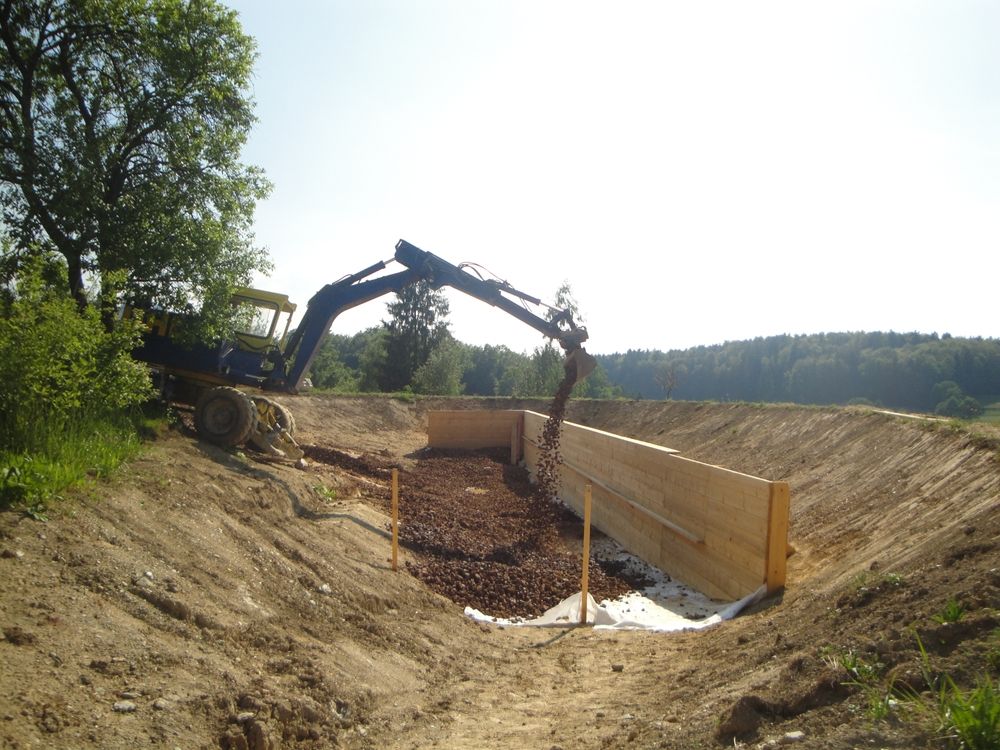
What Changes After Pond Excavation Completes
The process begins with identifying the optimal pond location based on existing drainage patterns, soil type, and how water will enter and exit the basin. Excavation removes material to the calculated depth, and slopes are shaped to prevent erosion while allowing safe access for livestock or equipment. Spillway structures are positioned to handle overflow during heavy rain without cutting channels through the dam or surrounding areas, and the basin floor is graded to concentrate water at the deepest point.
Once construction completes, you'll have a basin that fills from surface runoff or groundwater and holds volume through dry periods, with slopes that remain stable rather than sloughing into the water and a spillway that directs excess flow in a controlled path. Livestock operations gain reliable water access, residential properties add aesthetic and functional water features, and commercial sites meet stormwater retention requirements without ongoing maintenance issues. The pond holds its design depth and shape between seasons rather than silting in or eroding at the edges.
Pond size, depth, and spillway design depend on the property's water supply, intended use, and local drainage conditions. Residential ponds often prioritize aesthetics and recreation, livestock ponds focus on year-round water availability, and commercial retention ponds are sized to meet stormwater management calculations based on impervious surface area and peak runoff rates.
Answers to Frequent Service Questions
Pond construction projects in Parker County raise questions about design, timing, and long-term performance based on local soil and rainfall conditions.
What determines whether a site is suitable for pond construction?
Soil type, existing drainage patterns, and the property's topography all factor into feasibility—clay soils hold water better than sandy soils, and sites with natural low points or consistent runoff sources are typically easier to develop than flat areas with minimal drainage.
How does Parker County's land development affect pond construction demand?
Residential building growth and livestock operations across the county create steady demand for ponds, and commercial site development often requires retention basins as part of stormwater management plans approved by local authorities.
When should spillway setup happen relative to pond excavation?
Spillways are positioned and constructed during the earthmoving phase, not added afterward, because the spillway elevation and structure determine the pond's maximum water level and overflow path.
What's the difference between a livestock pond and a retention pond for commercial sites?
Livestock ponds are designed to hold water year-round for animal access, while retention ponds are sized to capture stormwater runoff during rain events and may drain down between storms depending on site requirements.
How long does a properly constructed pond take from survey to completion?
Site survey and design typically happen within a few days, excavation duration depends on pond size and equipment access, and most projects complete within one to two weeks of earthmoving work once conditions are suitable.
Firm Foundation Earthworks operates excavation and grading equipment capable of precision pond construction across Parker County and the Covington area. Contact us to discuss your water retention needs and property characteristics.