Precision Excavation That Supports Structural Integrity
Foundation Work in Weatherford for residential and commercial building projects requiring accurate depth control and grade-specific excavation
Foundation excavation must meet exact depth and dimension specifications to ensure that concrete pours align with structural plans and load-bearing requirements, with even minor deviations forcing costly adjustments or additional material to correct grade discrepancies. Firm Foundation Earthworks handles foundation excavation for residential and commercial projects throughout Weatherford and Parker County, where rising residential growth and data center development have increased demand for contractors capable of precision earth-moving integrated with drainage and pad preparation. Over ten years of combined foundation experience and on-site operator supervision ensure that excavation depth and perimeter dimensions match building plans before concrete work begins.
Foundation excavation involves removing soil to depths specified by structural engineers, typically two to four feet for residential slab foundations and deeper for commercial buildings with basement levels or pier-and-beam systems. The process requires coordination with site grading to manage excavated material and ensure that surrounding grades direct water away from the foundation once construction is complete.
Schedule a site evaluation to review foundation excavation requirements based on your building plans and soil conditions.
What Proper Foundation Excavation Requires
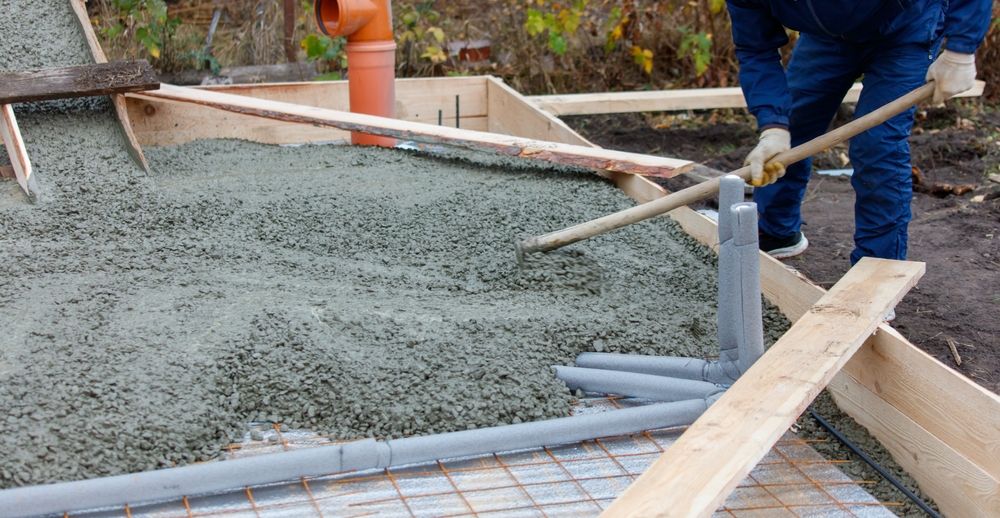
Excavation equipment must remove soil without over-digging, which weakens the bearing surface and forces contractors to backfill with compacted material to restore subgrade stability. Precision foundation work involves continuous depth verification using grade stakes or laser levels, with operators adjusting bucket angles to maintain consistent floor elevations across the entire foundation footprint.
Once excavation is finished, you'll see a level subgrade surface at the exact depth specified in your foundation plans, with perimeter dimensions that match building footprints and corners square to within fractions of an inch. The surrounding site remains stable, with slopes directing runoff away from the excavated area to prevent water accumulation before concrete pours occur.
Parker County's clay-heavy soils require careful moisture management during excavation, as wet conditions can turn subgrade layers into unstable bearing surfaces that compromise concrete curing and long-term foundation performance. Commercial projects often involve deeper excavations for utility access or structural basements, which demand equipment capable of handling higher volumes while maintaining the grade accuracy required for multi-story buildings.
Answers to Frequent Service Questions
Homeowners and contractors commonly ask about excavation depth, soil handling, and timing relative to other construction phases.
What determines how deep foundation excavation needs to be?
Excavation depth is specified by structural engineers based on building load requirements, frost line considerations, and soil bearing capacity, with most residential foundations in Weatherford requiring depths between two and four feet depending on slab or pier-and-beam design.
How do you prevent over-excavation that weakens the subgrade?
Operators use grade stakes and laser-guided equipment to monitor depth continuously during excavation, stopping before reaching final grade and then making finish passes to avoid cutting below the bearing surface specified in foundation plans.
What happens to the soil removed during foundation excavation?
Excavated material is typically stockpiled on-site for backfill around foundation perimeters after concrete work or redistributed for grading in other areas, with excess soil hauled off if the site can't accommodate the volume without affecting drainage patterns.
When should foundation excavation occur relative to other site work?
Foundation excavation follows site clearing and rough grading but precedes concrete forming and utility trenching within the building footprint, with timing coordinated around weather forecasts since rain can fill excavations and delay concrete pours in Parker County.
How does equipment selection affect foundation excavation accuracy?
Compact excavators provide the precision and reach control needed for residential foundations, while larger machines handle commercial projects with deeper excavations or extensive perimeter footings that require higher soil removal volumes.
Firm Foundation Earthworks coordinates foundation excavation with your construction timeline, ensuring that subgrade surfaces are ready for concrete work without delays caused by grade discrepancies or drainage issues. Contact the office to discuss excavation depth and material handling for your building project in Weatherford.